
Internet Protocol Television, commonly referred to as IPTV, is revolutionizing the way we consume television content. By delivering television services over Internet Protocol (IP) networks, IPTV offers a modern alternative to traditional broadcast methods.
IPTV allows users to stream live television and access video on demand services through their internet connection, providing a more flexible and personalized viewing experience. As we explore the world of IPTV, we’ll delve into the technical aspects of this technology and examine how it’s transforming the television landscape.
Key Takeaways
- IPTV delivers television content over Internet Protocol networks.
- It offers live television streaming and video on demand services.
- IPTV provides a more flexible and personalized viewing experience.
- The technology is transforming traditional television broadcasting.
- IPTV services are typically provided by telecom companies.
What Does IPTV Stand For?
IPTV, or Internet Protocol Television, represents a significant shift in how we consume television content. Unlike traditional broadcast methods, IPTV delivers television content over Internet Protocol networks, allowing for more interactive and personalized viewing experiences.
Defining Internet Protocol Television
At its core, IPTV stands for Internet Protocol Television, a technology that uses packet-switched network infrastructure to deliver video data to viewers. This method differs significantly from conventional TV transmission, enabling a more flexible television viewing experience.
Official Definitions and Industry Standards
The International Telecommunication Union focus group on IPTV (ITU-T FG IPTV) defines IPTV as “multimedia services such as television/video/audio/text/graphics/data delivered over IP-based networks managed to provide the required level of quality of service and experience, security, interactivity, and reliability.” To set up and use your IPTV, understanding these definitions is crucial.
The Alliance for Telecommunications Industry Solutions (ATIS) IPTV Exploratory Group in 2005 defined IPTV as “the secure and reliable delivery to subscribers of entertainment video and related services. These services may include, for example, Live TV, Video On Demand (VOD), and Interactive TV (iTV).” These definitions highlight the secure delivery of entertainment video and related services over managed networks.
Key aspects of IPTV include:
– IPTV stands for Internet Protocol Television, delivering content over IP networks.
– It uses packet-switched networks, unlike traditional TV transmission methods.
– IPTV is defined by international bodies with a focus on quality, security, and interactivity.
– Services include Live TV, Video On Demand, and Interactive TV features.
The Evolution of IPTV Technology
IPTV technology has undergone significant development since its inception in the early 1990s. The concept of delivering television programming through internet protocol was revolutionary, and its evolution has been shaped by various technological advancements.
Early Development and Milestones
The term IPTV first appeared in 1995 with the founding of Precept Software by Judith Estrin and Bill Carrico. They developed an internet video product named IP/TV, which was compatible with Mbone and transmitted single and multi-source audio and video traffic. In 1998, US West launched an IPTV service called TeleChoice in Phoenix, Arizona, using VDSL technology. This marked a significant milestone as it became the first company in the United States to provide digital television over telephone lines.
Global Adoption Trends
The adoption of IPTV technology has been a global phenomenon. In 1999, Kingston Communications launched Kingston Interactive Television (KIT), an IPTV service over digital subscriber line (DSL). By 2007, TPG had launched their IPTV service in Australia after a limited beta. The expansion continued with iiNet and Telstra launching IPTV services in conjunction with internet plans by 2010. As providers incorporated IPTV into their offerings, it transformed from an experimental technology to a mainstream entertainment option, leveraging the streaming capabilities of the network.
You can explore more about the benefits of IPTV by visiting https://www.g-iptv.com/unbeatable-abonnement-iptv-endless-entertainment/ to learn about the endless entertainment options available through IPTV service providers.
How IPTV Works: The Technical Explanation
IPTV’s functionality is rooted in its ability to convert traditional TV signals into data packets for IP transmission, allowing for more efficient delivery and greater viewing flexibility. This process involves several key technical components.
Video Encoding and Compression
The technical process begins with video encoding and compression, where content is processed using advanced video and audio codecs (like H.264/MPEG-4) to reduce file sizes while maintaining quality. This step is crucial for making transmission over an internet connection possible, as it significantly reduces the required bandwidth.
- Content is compressed using codecs to reduce file size.
- Compressed content is then encapsulated in MPEG transport stream or Real-time Transport Protocol (RTP) packets.
Transmission Protocols and Delivery Methods
IPTV utilizes various transmission protocols to deliver content efficiently. For live TV, IP multicasting allows data to be sent to multiple receivers using a single multicast group address, optimizing network resources. In contrast, on-demand content uses a negotiated unicast connection, ensuring personalized content delivery.
The Internet Group Management Protocol (IGMP) enables channel changing by managing subscriptions to live multicast streams. Meanwhile, Protocol Independent Multicast (PIM) ensures the proper distribution of television streams from source to viewer, duplicating received packets as needed across the network.
- IGMP manages live multicast stream subscriptions.
- PIM routes multicast streams across the network.
- IPTV servers manage content distribution, handling encoding, storage, and user authentication.
By understanding these technical aspects, you can appreciate how IPTV provides a flexible and efficient television viewing experience over your internet connection.
IPTV Architecture and Infrastructure
To comprehend how IPTV works, it’s essential to explore its underlying architecture and infrastructure. IPTV architecture consists of several core components working together to deliver television content over IP networks, including the head-end system, middleware, delivery network, and end-user equipment.
Core Components of IPTV Systems
The head-end serves as the central hub where service providers process and prepare content—encoding live TV channels, encrypting signals, and organizing them into multicast streams for distribution. Middleware plays a critical role in managing user interfaces, authentication, billing, and content navigation, essentially serving as the operating system of the IPTV service.
Centralized vs. Distributed Architectures
There are two main types of video server architecture for IPTV deployment: centralized and distributed. The centralized architecture model is relatively simple and easy to manage, with all media content stored in centralized servers. In contrast, a distributed architecture has bandwidth usage advantages and inherent system management features essential for managing a larger network and optimizing bandwidth usage.
Service providers often implement distributed systems to improve scalability and maintain consistent video quality by positioning content closer to end-users, reducing latency and buffering issues. The choice between centralized and distributed architectures depends on the size and scope of the IPTV deployment, considering factors like data throughput, quality of service, and redundancy.
By understanding these core components and architectural models, you’ll gain insight into how IPTV service providers deliver high-quality television content over IP networks, ensuring a seamless viewing experience for users.
Types of IPTV Services
IPTV technology has enabled multiple types of services, enhancing viewer experience. IPTV services encompass several distinct content delivery models, each offering different viewing experiences and flexibility for users seeking alternatives to traditional television.

Live Television Broadcasting
Live Television Broadcasting through IPTV delivers real-time channel streams similar to conventional TV but with added features like pause and rewind capabilities, giving viewers more control over their live viewing experience. This service allows users to watch their favorite shows as they are broadcast, with the added benefit of internet connectivity.
Video on Demand (VOD)
Video on Demand services represent one of the most popular IPTV offerings, allowing users to select and watch video content at their convenience from extensive libraries of movies, shows, and other programming. VOD services cater to the demand for flexible viewing options, enabling users to watch what they want, when they want.
Time-Shifted Media
Time-Shifted Media services, also known as catch-up TV, let viewers watch recently aired content for a limited period after the original broadcast—bridging the gap between live TV and on-demand viewing. This service is particularly useful for viewers who miss their favorite shows during the initial broadcast.
IPTV providers often bundle these services together to create comprehensive entertainment packages. For instance, a user might subscribe to a package that includes live TV, VOD, and catch-up TV services. The combination of these services offers users a flexible and personalized viewing experience.
- Live TV offers real-time broadcasting with interactive features.
- VOD services provide access to a vast library of content.
- Time-Shifted Media allows viewers to catch up on missed shows.
- Near Video on Demand (NVOD) offers scheduled broadcasts at staggered intervals.
Content licensing plays a crucial role in determining what’s available through different IPTV service types. Regional restrictions may also impact the availability of certain content, making it essential for providers to navigate these complexities to offer a robust service.
IPTV vs. Traditional Television: Key Differences
Understanding the differences between IPTV and traditional television is crucial for making informed decisions about your viewing options. Traditional television, encompassing both cable and satellite TV, has been the cornerstone of home entertainment for decades.
Transmission Methods Compared
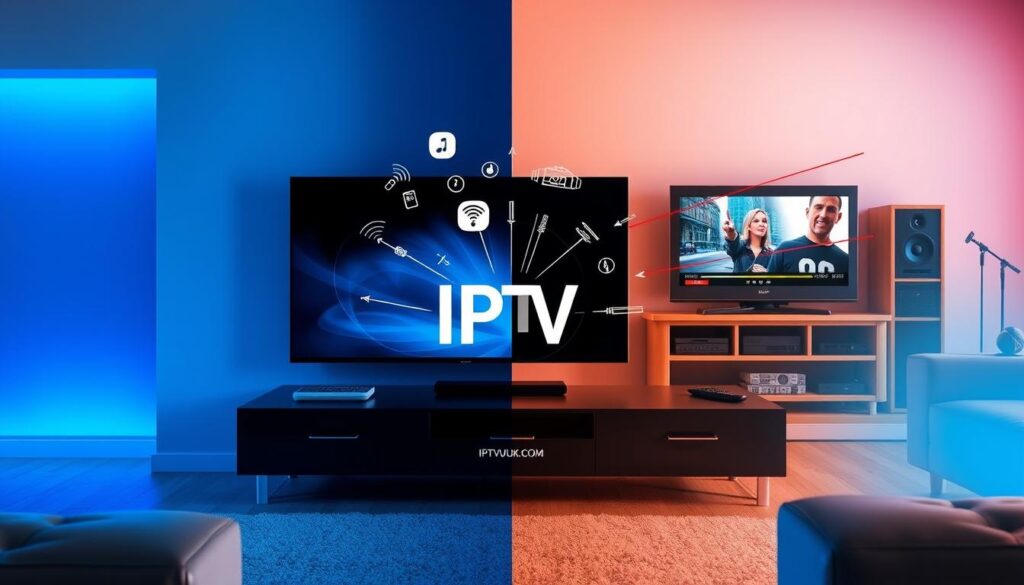
The primary distinction lies in how content is delivered to viewers. Traditional TV relies on a broadcast model, where cable television transmits signals through physical coaxial cables, and satellite television beams signals from orbiting satellites to home receiver dishes. In contrast, IPTV uses an Internet protocol (IP) based network to deliver TV channels to users’ set-top boxes, leveraging the same infrastructure that provides internet access.
User Experience and Flexibility
The way content is delivered significantly impacts the user experience. Traditional television follows a linear programming schedule, with channels broadcasting content at set times. IPTV, on the other hand, offers more flexible viewing options, allowing users to request content over the Internet at any time. This two-way communication model enables interactive features that aren’t possible with traditional television‘s one-way transmission method.
- IPTV provides on-demand access to content, unlike traditional TV’s linear broadcast schedule.
- The interactive capabilities of IPTV enhance the viewing experience, offering features like pause, rewind, and fast-forward.
- For more information on IPTV services and how they compare to traditional TV, you can visit Webnexs Blog or explore options like G-IPTV for live TV streaming.
In conclusion, the differences between IPTV and traditional cable satellite TV are not just technical; they fundamentally change how we consume television. As we move forward, understanding these differences will be key to navigating the evolving landscape of home entertainment.
Benefits of IPTV for Consumers
The advent of IPTV has brought about a paradigm shift in television viewing, providing users with unprecedented control over their content consumption. IPTV services offer a modern, flexible way to enjoy television, allowing users to watch their favorite shows anytime, anywhere, and on any device.
Enhanced Viewing Options
IPTV delivers a significantly enhanced viewing experience by freeing consumers from the constraints of scheduled programming. Users can access a variety of free and paid streaming services, TV channels, and on-demand media that span live events, vast movie libraries, and serialized content. Features like pause, rewind, and fast-forward for live broadcasts transform how users interact with television content.

Multi-Device Accessibility
The multi-device accessibility of IPTV services means users can start watching on their living room TV and continue seamlessly on their smartphone, tablet, or computer, creating a truly device-agnostic experience. With a reliable broadband connection, IPTV technology offers 4K streaming, surround sound, and high-bitrate content, providing superior video quality.
| Feature | Benefit |
|---|---|
| Pause, Rewind, Fast-Forward | Unprecedented control over live broadcasts |
| Multi-Device Accessibility | Seamless viewing across different devices |
| 4K Streaming & HDR Content | Superior video quality with sufficient internet bandwidth |
For more information on IPTV and its benefits, you can visit https://gptprotv.com/iptv/ to explore the various IPTV solutions available.
Setting Up IPTV: What You Need

Before you can start streaming IPTV, you’ll need to ensure you have the right equipment and connection. A reliable internet connection is crucial for streaming IPTV content without buffering or quality issues.
Hardware Requirements
The central hardware component for most IPTV setups is a set-top box that connects to your television and internet connection, serving as the bridge between online content and your viewing device. There are various types of set-top boxes available, including provider-specific hardware and universal Android-based boxes that support multiple IPTV services.
Alternatively, users can skip the box and use apps on their smart TVs, computers, or mobile devices to stream IPTV video content directly. Smart TVs with built-in internet connectivity can run IPTV apps directly on the television’s operating system, eliminating the need for a separate box.
Software and Subscription Options
To manage IPTV channels, you’ll need access to software or an app provided by your IPTV service. When evaluating IPTV subscription options, consider factors such as channel selection, video quality, reliability, and customer support.
To optimize your IPTV experience, ensure your home network is configured correctly, and consider using a wired connection for the best results. Be aware of potential compatibility issues between different devices and IPTV services to avoid technical frustrations.
Popular IPTV Services and Providers
The demand for flexible television viewing options has led to a surge in IPTV services. As consumers increasingly seek alternatives to traditional cable and satellite TV, IPTV providers are responding with a diverse range of offerings.
Global IPTV Market Leaders
Major IPTV providers like Hulu + Live TV, YouTube TV, and Sling TV have established themselves as market leaders. They offer comprehensive channel lineups with user-friendly interfaces and reliable streaming quality. For instance, Hulu + Live TV offers a wide range of live channels and on-demand content, while YouTube TV provides numerous live TV channels and unlimited DVR storage.
Other notable iptv services include AT&T TV, which allows users to stream live TV and on-demand content on up to 20 devices simultaneously, and Philo, which focuses on entertainment and lifestyle channels at a lower cost. You can explore more options and reviews on platforms like LinkedIn to find the best service for your needs.
Regional Service Offerings
Regional IPTV services cater to local markets with specialized content, language options, and pricing structures tailored to specific geographic areas. These providers often bundle their IPTV services with internet and phone services for added value.
The competition among IPTV providers has driven innovation in features like cloud DVR storage, multi-screen viewing, and personalized recommendations. As the market continues to evolve, consumers can expect even more flexible and user-centric streaming services and app offerings.
Challenges and Limitations of IPTV
As IPTV continues to evolve, it faces critical challenges related to internet connectivity and content regulation. These challenges can significantly impact the user experience and the overall viability of IPTV services.
Technical Constraints
One of the primary technical constraints is the requirement for a stable and fast internet connection. Poor connectivity can lead to buffering, interruptions, and low-resolution streaming. The need for substantial bandwidth means households with limited internet plans may experience quality issues or additional charges.
- Reliability of internet connection affects viewing quality
- Limited bandwidth can cause buffering or quality downgrades
- The “last mile” problem limits IPTV adoption in rural areas
Legal and Regulatory Issues
IPTV services also face complex legal and regulatory challenges. Some providers operate in a legal gray area, bypassing regional copyright laws and distribution agreements. It’s crucial for consumers to choose reputable IPTV services to avoid legal issues.
| Challenge | Description | Impact |
|---|---|---|
| Internet Connection | Requires stable and fast connection | Buffering, interruptions |
| Bandwidth Limitations | Limited data throughput | Quality downgrades, extra charges |
| Legal Gray Areas | Unauthorized services bypass copyright laws | Legal risks for consumers |
Understanding these challenges is essential for both consumers and providers to navigate the complexities of IPTV technology and ensure a high-quality viewing experience.
Conclusion: The Future of IPTV
With emerging technologies on the horizon, the potential for IPTV to transform the entertainment industry is vast. As we move forward, we can expect significant advancements in streaming capabilities and content delivery.
Innovations on the Horizon
The future of IPTV looks increasingly bright as emerging technologies like 5G networks, artificial intelligence, and advanced video compression formats continue to enhance streaming capabilities and content delivery. You can expect to see greater integration between IPTV services and smart home systems, creating seamless entertainment ecosystems.
Enhanced User Experience
Personalization will reach new heights as AI-driven recommendation engines analyze viewing habits with increasing sophistication. The boundaries between traditional IPTV and other streaming formats will likely continue to blur, with hybrid services offering combinations of live channels, on-demand libraries, and interactive content under unified interfaces. For more information on setting up IPTV services, you can refer to guides like the one on setting up Stocker IPTV.
As IPTV continues to evolve, it represents not just an evolution in how we receive television content but a fundamental shift in our relationship with video entertainment as a whole. With advancements in video quality, including wider adoption of 8K resolution and enhanced audio formats, the viewing experience will become even more immersive for users. The global nature of IPTV will continue to challenge regional content restrictions, potentially leading to more internationally available services like Netflix but for live television.