
Television is evolving, and Internet Protocol Television (IPTV) is at the forefront of this change. IPTV delivers television content over the internet, rather than through traditional satellite or cable formats, offering a more flexible viewing experience.
This revolutionary technology allows users to access both live and on-demand content via their internet connection, providing a more personalized experience. As the global IPTV market continues to grow, projected to reach $200 billion by 2030, it’s essential to understand the benefits and how to make the most of this service.
By switching to IPTV, viewers can enjoy a more streamlined television experience, with the ability to access a wide range of channels and content through a single platform.
Key Takeaways
- IPTV delivers television content over the internet, offering a more flexible viewing experience.
- The global IPTV market is projected to reach $200 billion by 2030.
- IPTV provides access to both live and on-demand content via internet connections.
- Viewers can enjoy a more personalized experience with IPTV.
- IPTV is a revolutionary technology changing the way people consume television content.
What’s IPTV? Understanding the Basics
IPTV, or Internet Protocol Television, is revolutionizing the way we consume television content by delivering it over internet protocol networks. This technology allows users to stream different types of media content, such as live TV channels, movies, and videos, all through an active internet connection.
Definition and Meaning of IPTV
IPTV stands for Internet Protocol Television. It refers to television content that is delivered over an Internet Protocol (IP) network, rather than through traditional satellite or cable television formats. The IPTV system uses an internet protocol-based network to deliver TV channels to users’ set-top boxes, providing a modern alternative to conventional TV viewing methods.
As noted by industry experts, “IPTV transforms television from a passive broadcast medium to an interactive service that more closely resembles browsing the internet, giving users unprecedented control over their viewing experience.” This shift is significant as it changes how we interact with television content.
How IPTV Differs from Traditional TV
Unlike traditional TV, where you’re limited to watching what’s being broadcast at a specific time, IPTV gives you control over what and when you watch through internet-based delivery. Here are some key differences:
- IPTV delivers television content through internet protocol networks instead of traditional broadcast signals, cable, or satellite methods.
- Traditional cable satellite systems transmit all channels simultaneously, requiring you to “tune in” to your desired channel, while IPTV sends only the channel you’ve requested through internet protocol.
- With IPTV, content is stored on servers and delivered on-demand, creating a two-way interactive experience compared to the one-way transmission of traditional television services.
Let’s compare the key features of IPTV and traditional TV in a table:
| Feature | IPTV | Traditional TV |
|---|---|---|
| Content Delivery | Internet Protocol Network | Satellite/Cable |
| Viewing Experience | On-demand, Interactive | Scheduled, Passive |
| User Control | High | Limited |
As the table illustrates, IPTV offers a more flexible and interactive viewing experience compared to traditional TV. By understanding these differences, you can make informed decisions about your television viewing options.
How IPTV Works: The Technology Behind It
IPTV technology revolutionizes television viewing by utilizing internet protocol to deliver content directly to your device. Unlike traditional TV, IPTV works by breaking down video content into data packets that are transmitted over an internet protocol network, similar to how websites and emails are delivered.
IPTV Architecture Explained
The architecture behind IPTV is crucial for its operation. There are two main types of IPTV architecture: centralized and distributed. A centralized architecture stores all content on central servers, while a distributed model spreads content across multiple locations. Each model has its advantages for scaling and bandwidth management.
As noted by industry experts, “The choice between centralized and distributed architecture depends on the service provider’s network and content delivery requirements.” This highlights the importance of understanding the underlying technology when selecting an IPTV service.
Network Requirements for IPTV
Your internet connection quality is crucial for IPTV performance. Most providers recommend at least 10-15 Mbps for HD content and 25+ Mbps for 4K streaming to ensure smooth playback without buffering. A stable and fast internet connection ensures that you can enjoy your favorite shows without interruptions.
To summarize the key points:
- IPTV uses internet protocol to deliver video content.
- The technology supports both centralized and distributed architectures.
- A fast and stable internet connection is essential for optimal IPTV performance.
The Three Main Types of IPTV Services
IPTV services have revolutionized the way we consume television content, offering three distinct formats to cater to different viewing preferences. These formats provide users with unprecedented flexibility and control over their viewing experience.
Video on Demand (VOD)
Video on Demand (VOD) gives you complete control over what you watch and when, allowing you to select content from extensive libraries and watch at your convenience. Similar to services like Netflix, VOD often includes television programming, making it a comprehensive entertainment solution. With VOD, you can browse through a vast collection of movies, TV shows, and documentaries, pausing, rewinding, or fast-forwarding as you please.
Time-Shifted Media
Time-Shifted Media, also known as catch-up TV, bridges the gap between traditional broadcasting and on-demand viewing. It allows you to watch recently aired shows for a limited time after their original broadcast date. This service is particularly useful for viewers who miss their favorite shows due to busy schedules. Time-Shifted Media combines the benefits of live TV with the flexibility of on-demand viewing, ensuring you never miss out on your favorite content.
Live IPTV Broadcasting
Live IPTV Broadcasting delivers real-time content just like traditional television but through internet protocol. This makes it particularly popular for sports events, news, and special live streaming programs. With Live IPTV, you can enjoy the excitement of live events from the comfort of your home, with the added benefit of being able to pause or rewind live TV if needed. For those interested in exploring premium IPTV services, you can learn more about choosing the best IPTV service to enhance your viewing experience.
In summary, IPTV services come in three main formats: Video on Demand, Time-Shifted Media, and Live IPTV Broadcasting. Each format caters to different viewing preferences, offering unique ways to consume television content. By understanding these formats, you can make informed decisions about which IPTV service best suits your needs.
Key Benefits of IPTV Over Traditional Television
With IPTV, viewers can enjoy a more flexible and personalized television experience. IPTV offers several advantages over traditional TV, making it an attractive option for those looking to upgrade their viewing experience.
Enhanced User Experience and Personalization
IPTV transforms your viewing experience by offering unprecedented control over what you watch and when. You can pause live broadcasts, rewind to catch missed moments, and fast-forward through content at your convenience. The personalization options are extensive, including customizable interfaces and content recommendations based on your viewing habits. You can even create different profiles for household members, ensuring everyone gets the content they want.
Multi-Device Compatibility
One of the significant benefits of IPTV is its ability to deliver content via the internet to a wide range of devices, both at home and on the go. This means you can watch your favorite programs on smartphones, tablets, laptops, and smart TVs, providing true viewing flexibility. Whether you’re at home or traveling, IPTV ensures that your content is always accessible.
Cost-Effectiveness and Flexibility
For many consumers, one of the primary motivations for switching to IPTV is the potential to save money. Traditional cable and satellite packages often come with long-term contracts, hidden fees, and bloated channel bundles that force you to pay for dozens of channels you never watch. IPTV services, on the other hand, typically offer more targeted channel packages without long-term contracts, allowing you to pay only for the content you want. You can explore more about IPTV services and their cost-effectiveness on platforms like G-IPTV.
By switching to IPTV, you can enjoy a more personalized, flexible, and cost-effective television experience. With its multi-device compatibility and enhanced user experience, IPTV is revolutionizing the way we consume television content.
Popular IPTV Services and Providers

Navigating the world of IPTV services can be complex, but understanding the popular providers can help. The IPTV market features numerous legitimate service providers that have secured proper licensing agreements with content owners to legally distribute television channels and on-demand programming.
Legal IPTV Services in Canada
In Canada, several legal IPTV services offer comprehensive channel lineups that comply with Canadian broadcasting regulations while providing access to both local and international content. These iptv services operate transparently, have clear terms of service, and are subject to regulatory oversight.
Examples of well-known, legitimate IPTV service providers include major players that have adapted to the Canadian market.
Global IPTV Platforms
Global IPTV platforms like Sling TV, YouTube TV, and Hulu + Live TV have revolutionized television distribution by offering transparent subscription models with clearly defined channel packages. When choosing between IPTV providers, it’s essential to consider factors beyond price, including channel selection, streaming quality, device compatibility, and customer support options.
Many traditional cable and satellite providers have launched their own IPTV services, allowing them to retain customers who want more flexible viewing options while leveraging their existing content relationships and infrastructure.
Setting Up IPTV: A Step-by-Step Guide
Setting up IPTV can be straightforward with the right equipment and internet connection. To get started, you’ll need to understand the hardware requirements and how to configure your device.
Required Hardware for IPTV
To use IPTV, you’ll need a device that can support it. Newer Smart TVs often come with built-in IPTV capabilities, but older TVs may require a set-top box like Apple TV, Roku, or Amazon Fire TV. These devices translate internet protocol signals into a format your TV can read.
- Smart TVs with built-in IPTV support
- Set-top boxes (Apple TV, Roku, Amazon Fire TV)
- Computers and mobile devices
Internet Requirements for Optimal Performance
A stable internet connection is crucial for IPTV. The required speed depends on the stream quality:
- Standard Definition (SD): 3-5 Mbps
- High Definition (HD): 10-15 Mbps
- 4K Ultra HD: 25 Mbps or higher
For more details on IPTV requirements, you can refer to thisguide.
Installation and Configuration Process
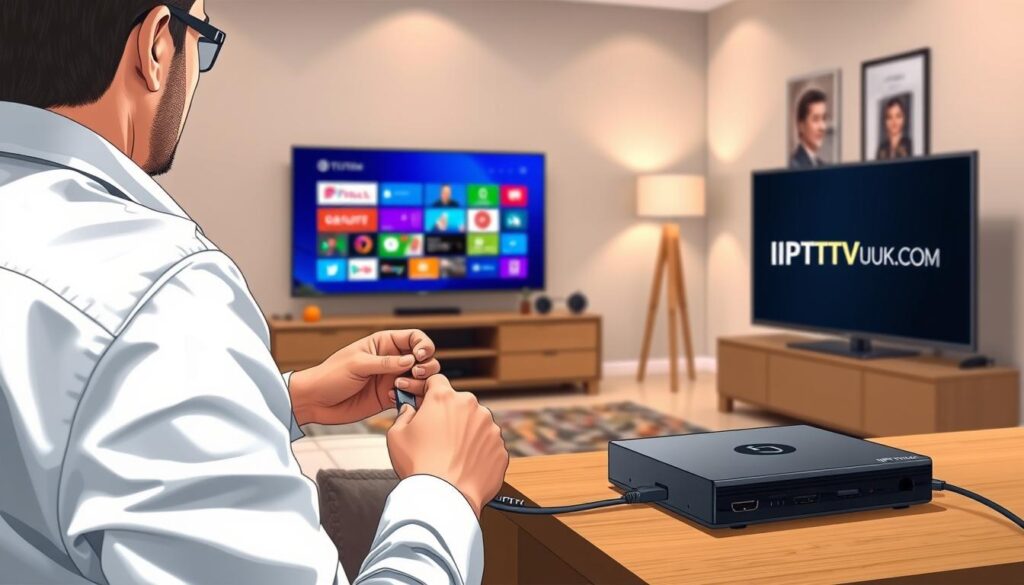
The installation process typically involves connecting your device to your TV via HDMI, ensuring it’s connected to your home internet network, and downloading the appropriate app for your IPTV service. For instance, you can follow this guide to set up IPTV on your iPhone or iPad.
Configuration involves creating an account, entering your subscription details, and adjusting settings like video quality to optimize performance based on your internet connection speed.
IPTV vs. OTT: Understanding the Differences
IPTV and OTT represent two different approaches to delivering video content over the internet, with unique advantages and limitations. While both technologies have revolutionized the way we consume television and video content, they differ significantly in their underlying infrastructure and business models.
Delivery Methods and Infrastructure
The primary distinction between IPTV and OTT lies in their delivery networks. IPTV services typically operate on a private, managed network provided by an Internet Service Provider (ISP), which dedicates specific bandwidth to ensure consistent streaming quality and reliability. On the other hand, OTT platforms like Netflix and YouTube deliver content over the public internet without dedicated bandwidth, making them more susceptible to network congestion and quality fluctuations during peak usage times.
Content Availability and Licensing
Content licensing represents another key difference between IPTV and OTT services. IPTV providers often focus on delivering traditional TV channels with live programming, while OTT services like Netflix primarily offer on-demand libraries of movies and series. However, the distinction between these services is gradually blurring as traditional IPTV providers launch their own on-demand libraries and OTT platforms experiment with live streaming options.
| Feature | IPTV | OTT |
|---|---|---|
| Delivery Network | Private, managed network | Public internet |
| Content Focus | Live TV channels, some on-demand | Primarily on-demand content |
| Bandwidth Management | Dedicated bandwidth for quality | Shares bandwidth with other internet traffic |
For more information on IPTV and its benefits, you can visit this detailed guide on IPTV, which provides a comprehensive overview of IPTV technology and its advantages.
Legal Considerations and Risks of IPTV
With the rise of IPTV, consumers must navigate a mix of legal and illegal services, each with its own risks. The IPTV landscape is complex, with both legitimate IPTV services that have secured proper licensing agreements and unauthorized providers that distribute content illegally.
Legitimate vs. Illegal IPTV Services
A legal IPTV service is one that has obtained the necessary licenses and rights to distribute the content it offers. This means they have formal agreements with television networks, movie studios, and sports leagues. In contrast, illegal IPTV services operate without licenses, capturing and rebroadcasting content from legitimate sources over the internet at very low prices. For more information on the dangers of illegal IPTV services, visit FACT-uk.org.uk.
| Characteristics | Legitimate IPTV Services | Illegal IPTV Services |
|---|---|---|
| Licensing | Have proper licenses | Operate without licenses |
| Pricing | Market-rate pricing | Suspiciously low prices |
| Security | Secure payment methods | Often require unvetted apps |
Security Concerns and How to Stay Safe
The security risks associated with illegal IPTV services are substantial. Users are often required to download third-party apps or software that may contain malware, potentially compromising personal data and financial information. To stay safe, it’s crucial to research a provider thoroughly before subscribing and be wary of prices that seem too good to be true. For those interested in starting their own IPTV reseller business, resources are available at G-IPTV.
“Using illegal IPTV services not only puts your personal data at risk but also contributes to a broader ecosystem of content piracy.”
To protect yourself, stick to IPTV services that have apps available through official app stores and always review the terms of service carefully.
The Future of IPTV Technology
The future of IPTV technology is poised for significant growth, driven by emerging trends and innovations. As we explore the potential developments in this field, it’s clear that IPTV will continue to revolutionize the way we consume live television and streaming content.
Emerging Trends
Several emerging trends are shaping the future of IPTV. These include the democratization of broadcasting, where individuals and small businesses can launch their own niche IPTV channels and live streaming services to serve specialized audiences around the world. Additionally, artificial intelligence is transforming the IPTV landscape through advanced content recommendations and automated content categorization.
Integration with Smart Home Systems
We’re also seeing increasing integration between IPTV and smart home systems, allowing viewers to control their television experience via voice commands and synchronize viewing with other home automation features. This integration is set to enhance the user experience, making it more seamless and convenient.
| Trend | Description | Impact |
|---|---|---|
| Democratization of Broadcasting | Individuals and small businesses can launch niche IPTV channels | Increased diversity in content offerings |
| AI-driven Content Recommendations | Advanced algorithms suggest content based on viewing habits | Enhanced user experience and engagement |
| Integration with Smart Home Systems | IPTV controlled via voice commands and synchronized with home automation | More convenient and seamless viewing experience |
Conclusion: Is IPTV Right for You?
IPTV represents a significant shift in how we consume television content, offering a range of benefits and features not available through traditional cable or satellite TV. Whether IPTV is right for you depends on several factors, including your viewing habits, internet connection quality, and budget considerations.
For those with reliable high-speed internet, IPTV can offer substantial cost savings, especially if you primarily watch shows on-demand or across multiple devices. To explore your options further, visit https://ipstable.com/best-iptv-service-everything-you-need-to-know/ for a comprehensive guide on the best IPTV services.
As the television landscape continues to evolve, IPTV emerges as a viable alternative to traditional TV viewing methods, making now an excellent time to consider making the switch to internet protocol television.