
Imagine having the freedom to watch your favourite TV shows and movies on your own terms, without being tied to a traditional broadcast schedule. Internet Protocol Television (IPTV) makes this possible by delivering television content over the internet, rather than through traditional cable or satellite methods.
With IPTV, you can enjoy on-demand content, time-shifted viewing, and interactive program guides, giving you control over your entertainment experience. IPTV services operate on managed networks that prioritize video traffic, ensuring consistent streaming quality without buffering issues. For those looking for alternatives to traditional TV services, IPTV is an attractive option. You can explore services like IPTV like QQTV to stream live TV on your devices.
Key Takeaways
- IPTV delivers television content over the internet, offering more flexibility than traditional TV services.
- On-demand content and time-shifted viewing are key features of IPTV services.
- Managed networks ensure consistent streaming quality.
- IPTV is an attractive alternative to traditional TV services.
- Explore different IPTV services to find the one that suits your needs.
What is IP Television IPTV?
IP Television, commonly referred to as IPTV, represents a significant shift in how we consume television content. It utilizes internet protocol technology to deliver television programs and other video content to subscribers.
The Evolution of Television Delivery
The journey of television delivery has been marked by significant technological advancements. From the early experimental broadcasts in the late 1990s to the mainstream adoption today, IPTV has evolved substantially. Initially, television broadcasts were transmitted through traditional methods such as satellite and cable. However, with the advent of broadband internet, IPTV began to gain traction in the 2000s.
The key milestones in this evolution include:
- The transition from analog to digital television, enabling better quality and more channels.
- The use of internet protocol (IP) for delivering television content, allowing for a more personalized and interactive experience.
- The development of closed, managed networks that prioritize video data packets, ensuring consistent quality and reliability.
Today, IPTV stands as a testament to how technology can transform traditional entertainment delivery methods.
How IPTV Differs from Traditional TV Services
IPTV differs fundamentally from traditional TV services in its delivery mechanism. While traditional television relies on one-way broadcasting through airwaves or cables, IPTV uses a two-way digital network. This enables not only interactive features but also personalized viewing experiences.
The main differences include:
- IPTV provides access to thousands of channels from around the world, as well as extensive on-demand libraries.
- Unlike traditional TV, which operates on a predetermined schedule, IPTV allows viewers to watch content whenever they want.
- The use of a closed, managed network infrastructure by IPTV services ensures consistent quality and reliability, superior to public internet streaming services.
By leveraging these advantages, IPTV offers a more flexible and engaging television experience compared to traditional TV services.
How IP Television IPTV Works
Understanding how IPTV works requires a look into its sophisticated technical infrastructure. At its core, IPTV functions through a complex system that begins at the head-end facility where television content is acquired, encoded into digital formats, and prepared for distribution across IP networks.
The Technical Infrastructure Behind IPTV
The IPTV head-end is a critical component where live TV channels and AV sources are encoded, encrypted, and delivered as IP multicast streams. Meanwhile, a video on demand (VOD) platform stores on-demand video assets and serves them as IP unicast streams when a user requests them. This infrastructure is crucial for delivering high-quality video content to users.
Key components of the IPTV infrastructure include:
- Encoding and encrypting live TV channels and AV sources
- Delivering content as IP multicast streams for live television
- Serving on-demand content as IP unicast streams
Content Delivery Networks and Streaming Protocols
Content delivery networks (CDNs) play a vital role in IPTV operations by strategically distributing servers across geographic regions to reduce latency and ensure smooth video delivery even during peak viewing times. Various streaming protocols like Real-Time Transport Protocol (RTP), Real-Time Streaming Protocol (RTSP), and HTTP Live Streaming (HLS) work behind the scenes to manage how video data is packaged, transmitted, and reassembled on your viewing device.
As noted by a leading industry expert,
“The use of CDNs and advanced streaming protocols is what sets IPTV apart from other streaming services, providing a more consistent and high-quality viewing experience.”
By leveraging these technologies, IPTV service providers can offer a superior viewing experience with minimal buffering and high video quality. Quality of Service (QoS) mechanisms further prioritize video data packets over other internet traffic within the service provider’s network, ensuring a smooth streaming experience.
Types of IPTV Services Available
There are three primary types of IPTV services available, each offering unique benefits and features. These services cater to different viewer preferences, providing a range of options for accessing and enjoying content.
Video on Demand (VOD) Services
Video on Demand services represent one of the most popular features of IPTV. With VOD, you gain access to extensive libraries of movies, TV shows, and documentaries that you can watch at your convenience. This service allows you to pause, rewind, fast-forward, and resume content across different devices, creating a personalized entertainment schedule that fits your lifestyle.
VOD services provide a vast array of content, including new releases and classic titles. You can browse through various categories, read reviews, and even get recommendations based on your viewing history.
Time-Shifted Media
Time-Shifted Media, often referred to as catch-up TV, is a feature that allows you to watch television shows that have already aired. This service bridges traditional broadcasting and on-demand viewing, ensuring you never miss your favorite shows. The catch-up TV functionality typically stores programs for 7-30 days, depending on the service provider, letting you “shift” your viewing time to when it’s convenient for you.
Live IPTV Broadcasting
Live IPTV Broadcasting delivers real-time content, just like traditional television, but with enhanced features. You can watch events as they happen, such as live sports, news broadcasts, concerts, and award shows. Live IPTV offers higher resolution options, multiple camera angles for sporting events, and interactive elements that traditional broadcasts cannot provide.
| IPTV Service Type | Description | Key Features |
|---|---|---|
| Video on Demand (VOD) | Access to a vast library of content | Pause, rewind, fast-forward; personalized viewing schedule |
| Time-Shifted Media | Catch-up TV for previously aired shows | Content available for 7-30 days after original broadcast |
| Live IPTV Broadcasting | Real-time content delivery | Higher resolution, multiple camera angles, interactive elements |
By understanding the different types of IPTV services available, you can make informed decisions about which services best suit your viewing habits and preferences.
Key Features of IP Television IPTV
One of the key advantages of IPTV is its ability to offer a two-way interactive experience, unlike the one-way broadcast of traditional TV. This interactivity is made possible by the IP network, allowing for a personalized viewing experience that caters to individual preferences.
Interactive Program Guides and User Interfaces
IPTV platforms offer interactive program guides (IPGs) that transform how users discover and navigate content. These guides provide powerful search capabilities, personalized recommendations, and detailed information about shows, making it easier for viewers to find what they’re looking for.
The customizable dashboards allow users to organize channels and content according to their preferences, creating shortcuts to favorite shows and hiding content that doesn’t interest them. This level of personalization enhances the overall viewing experience.
Multi-Device Compatibility
Another significant advantage of IPTV is its multi-device compatibility. Users can seamlessly access their subscription across various devices, including smart TVs, smartphones, tablets, computers, and streaming devices, without incurring additional hardware costs. This flexibility allows viewers to watch their favorite content anywhere, anytime, on the device of their choice.
Recording and Playback Capabilities
IPTV services also offer advanced recording and playback capabilities. With cloud-based DVRs, users can record multiple programs simultaneously without being limited by physical storage constraints. They can also access their recordings from any connected device, providing unparalleled convenience. Advanced playback features like instant replay, slow motion, and scene skipping further enhance the viewing experience, especially for sports and live events.
In summary, IPTV’s key features, including interactive program guides, multi-device compatibility, and advanced recording capabilities, significantly enhance the television viewing experience. By providing a more personalized, flexible, and interactive service, IPTV addresses many of the frustrations associated with traditional TV services, making it an attractive option for modern viewers.
IPTV Set-Top Boxes and Equipment

IPTV set-top boxes are essential devices that bridge your internet connection and television, decoding encrypted streams and transforming them into viewable content on your screen. When selecting an IPTV set-top box, consider key specifications like processor speed, RAM capacity, video output resolution (4K capability), and connectivity options (Ethernet vs. Wi-Fi) to ensure optimal performance for your viewing habits.
Popular IPTV Set-Top Box Models
Popular IPTV set-top box models from manufacturers like Formuler, Infomir MAG, Dreamlink, and BuzzTV offer varying features at different price points, with premium models providing advanced recording capabilities and voice control. For instance, the Formuler Z8 is known for its high-performance processor and extensive feature set, making it a favourite among IPTV users. You can find more information on the best IPTV providers and their recommended devices on our website: How to Choose the Best IPTV Providers for.
Smart TVs with Built-in IPTV Support
Many modern smart TVs from Samsung, LG, Sony, and other manufacturers now come with built-in IPTV apps and compatibility, potentially eliminating the need for a separate set-top box altogether. For those using smart TVs or streaming devices like Amazon Fire Stick or Apple TV, dedicated IPTV apps can be installed directly, though they may offer slightly different features than purpose-built set-top boxes from your service provider.
Internet Requirements for Quality IPTV Streaming
A robust internet connection is crucial for a seamless IPTV viewing experience. To enjoy uninterrupted streaming, your network must meet specific requirements.

Minimum Bandwidth Requirements
The required internet speed depends on the quality of the stream. For a standard-definition (SD) stream, you generally need at least 3-5 Mbps. For high-definition (HD) content, a minimum of 10-15 Mbps is recommended. For 4K Ultra HD streaming, you will need a stable connection of 25 Mbps or higher.
| Streaming Quality | Minimum Bandwidth Required |
|---|---|
| Standard Definition (SD) | 3-5 Mbps |
| High Definition (HD) | 10-15 Mbps |
| 4K Ultra HD | 25 Mbps or higher |
Network Stability and Quality of Service
Unlike traditional cable or satellite services that maintain consistent quality regardless of neighborhood usage, IPTV performance can be affected by network congestion during peak hours, making a robust internet connection essential. Network stability is equally important as raw speed—frequent disconnections or fluctuations in your internet service will result in buffering, pixelation, and service interruptions regardless of your maximum bandwidth.
For a smooth IPTV experience, consider upgrading to a business-class internet service if you’re experiencing consistent issues, as these plans often provide better Quality of Service guarantees and prioritized technical support compared to residential packages. You can find more information on choosing the best IPTV service here.
Your home network configuration plays a crucial role in streaming quality—wired Ethernet connections provide more stability than Wi-Fi, and strategically placed mesh Wi-Fi systems can eliminate dead zones that cause streaming problems.
IPTV Pricing Plans Explained
Understanding IPTV pricing plans is crucial for making an informed decision about your television service. IPTV services have revolutionized the way we consume television, offering more flexible and affordable options compared to traditional cable and satellite TV.
IPTV pricing plans typically follow three main models: tiered packages based on channel count and content types, à la carte selection where you pay only for specific channels you want, and hybrid models that combine base packages with add-on options. This variety allows you to choose a plan that best suits your viewing habits.
Subscription Models and Payment Options
Most IPTV providers offer flexible subscription terms, ranging from monthly no-contract options to annual commitments that provide significant discounts. Payment options have also expanded to include digital payment platforms like PayPal and cryptocurrency for some providers, giving you more convenience in managing your subscription.
The flexibility in subscription models and payment options is a significant advantage of IPTV services. You can opt for a month-to-month plan if you’re unsure about committing long-term, or choose an annual plan if you’re confident in your viewing preferences.
Hidden Costs and Additional Fees
While IPTV services are generally more transparent about their pricing, it’s essential to be aware of potential hidden costs. These can include equipment rental fees, HD/4K quality upcharges, multi-room viewing fees, and early termination penalties. Some providers may also advertise low introductory rates that automatically increase after a few months.
To avoid unexpected expenses, always read the fine print and understand the true long-term cost of the service before committing. This includes checking for any additional fees associated with your chosen payment method or subscription plan.
Premium vs. Basic IPTV Packages
As IPTV continues to grow in popularity, understanding the nuances between basic and premium packages becomes increasingly important. The choice between these packages depends on several factors, including your viewing habits, budget, and the type of content you prefer.
Content Availability in Different Tiers
Basic IPTV packages typically include local broadcast networks, popular cable channels, and limited on-demand content at an affordable price point. These packages are suitable for casual viewers who primarily watch mainstream programming. In contrast, premium packages expand content libraries substantially, offering hundreds of additional channels, including specialty networks, international programming, extensive sports coverage, and comprehensive on-demand libraries with recent releases.
The price differential between basic and premium tiers can range from $20-50 monthly. This requires careful consideration of your viewing habits to determine if the additional content justifies the higher cost for your household.
Specialized Content Packages
Many IPTV providers now offer specialized content packages that cater to specific interests. For instance, sports enthusiasts can access comprehensive athletic coverage, including out-of-market games and exclusive analysis. Movie buffs can enjoy premium film channels, while multilingual households can receive international programming from specific regions. Additionally, “skinny bundles” have become increasingly popular, focusing on specific content categories like entertainment, news, or lifestyle, creating more cost-effective options for viewers with targeted interests.
When choosing an IPTV service, it’s essential to evaluate the available packages and consider your specific needs. By doing so, you can select a package that provides the right balance of content and cost, ensuring a satisfying viewing experience.
Comparing Popular IPTV Service Providers
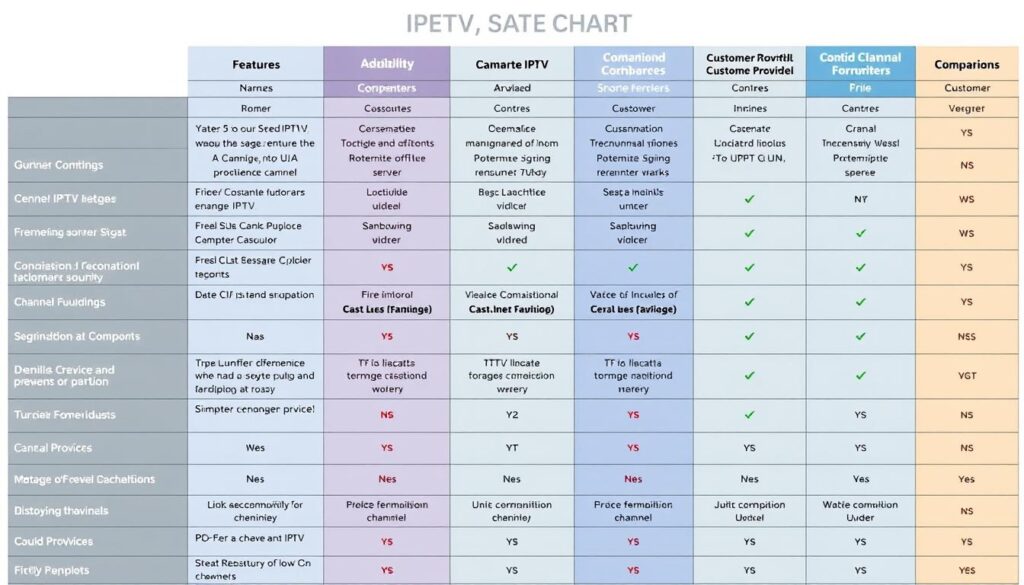
The IPTV landscape in Canada is characterized by a mix of large telecom companies and regional providers, each offering unique services and features. When comparing these providers, several factors come into play, including channel lineups, pricing, customer service, and technical capabilities.
Major IPTV Providers in Canada
Canada’s IPTV market features established telecom giants like Bell (Fibe TV), Rogers (Ignite TV), Telus (Optik TV), and Shaw (BlueCurve TV). These major providers offer comprehensive channel lineups, reliable infrastructure, and bundling options with internet and phone services. For instance, you can visit Software Testing Help for a detailed comparison of these providers.
Regional providers like VMedia, TekSavvy TV, and Zazeen offer more affordable alternatives, with prices ranging from $25 to $60 per month for comparable packages. While they may have fewer channels, they provide greater flexibility and no long-term contracts, appealing to cost-conscious consumers.
Customer Service and Support Comparison
Customer service quality varies dramatically across IPTV providers. When evaluating providers, consider factors beyond just price, such as the availability of 24/7 technical support, average resolution times, and self-service troubleshooting tools. For example, a review on G-IPTV highlights the importance of customer support in IPTV services.
Major providers typically offer dedicated customer support, professional installation, and regular platform updates with new features. However, regional providers may offer more personalized service, albeit with potentially longer resolution times. When choosing an IPTV provider, it’s essential to weigh these factors based on your individual needs and preferences.
Legal Considerations for IPTV Users
The legal considerations for IPTV users are multifaceted, involving both the risks of using unlicensed services and the benefits of opting for legitimate providers. As the IPTV market continues to evolve, it’s crucial for consumers to understand the legal landscape to make informed decisions.
Licensed vs. Unlicensed IPTV Services
A legal IPTV service is one that has secured the proper licenses and rights to distribute the content it offers. This means they have formal agreements with the television networks, movie studios, and sports leagues whose content they broadcast. On the other hand, illegal IPTV services operate without any licenses, capturing broadcast signals from legitimate sources and rebroadcasting them over the internet at a significantly lower cost.
Using unlicensed IPTV services exposes you to potential legal liability under copyright infringement laws. The risks include receiving warning letters, having your service disconnected by your internet provider, and in some cases, facing financial penalties. Moreover, unauthorized services often require the installation of unverified applications that may contain malware, creating security vulnerabilities that could compromise your personal information or provide access to your home network.
Key Differences Between Licensed and Unlicensed IPTV Services
| Feature | Licensed IPTV Services | Unlicensed IPTV Services |
|---|---|---|
| Licensing | Have formal agreements with content owners | Operate without licenses |
| Content Quality | High-quality, legitimate content | Variable quality, potentially pirated content |
| Legal Risks | Minimal risk for users | High risk of legal action against users |
| Security | Secure payment processing and data protection | Often involves unverified applications with potential malware |
| Pricing | Typically more expensive due to licensing fees | Usually cheaper, but with hidden risks |
Copyright Issues and Regional Restrictions
Copyright laws and regional restrictions play a significant role in the IPTV landscape. Licensed IPTV services must comply with these regulations, ensuring that content is distributed legally and within the boundaries of their licensing agreements. Users of unlicensed services, however, bypass these restrictions, potentially infringing on copyrights and facing legal consequences.
When choosing an IPTV service, it’s essential to consider the legal implications of your choice. Opting for a licensed IPTV service not only minimizes legal risks but also supports the creators and distributors of the content you enjoy.
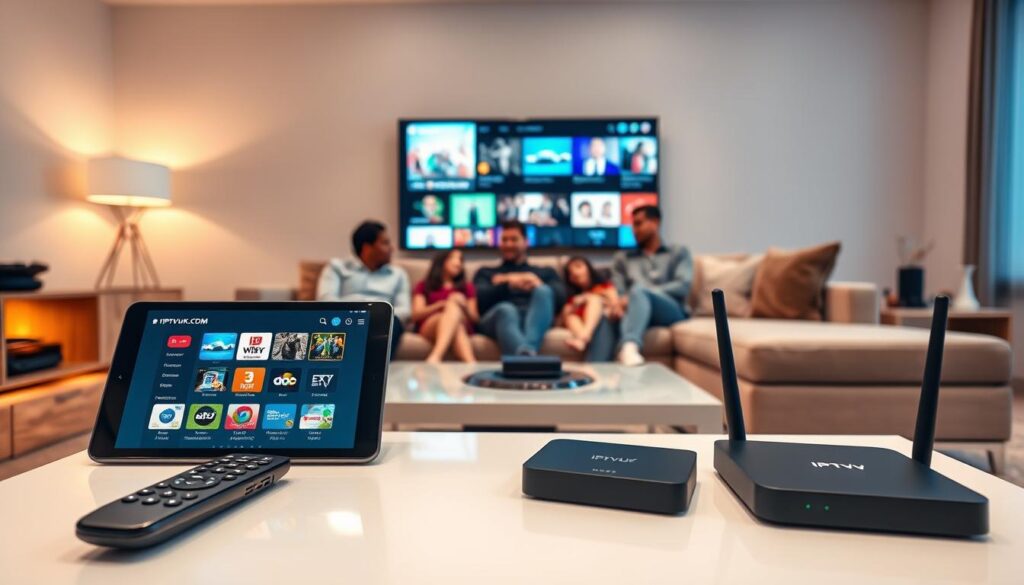
Setting Up Your IPTV Service at Home
Setting up your IPTV service at home is a straightforward process that requires some basic equipment and a stable internet connection. To get started, you’ll need to ensure your internet meets the minimum requirements for IPTV streaming, typically at least 15 Mbps for HD content.
Installation Guide
For a successful IPTV setup, follow these steps:
- Choose a compatible device, such as a provider-supplied set-top box or a supported streaming device.
- If using a set-top box, connect it to your TV via HDMI and to your internet, preferably via Ethernet for stability.
- Power on the device and follow the on-screen activation instructions, which usually involve entering a provided username and password.
- If using a smart TV or streaming device, download your provider’s app from the appropriate app store, sign in with your credentials, and potentially activate the device through a code on the provider’s website.
For more information on what IPTV is, you can visit this guide to understand the basics of IPTV services.
Troubleshooting Common Issues
Despite a smooth setup, you may encounter some common IPTV issues. Here are some troubleshooting tips:
- Buffering can often be resolved by checking your internet speed, reducing network congestion, or connecting via Ethernet.
- Audio/video sync problems can usually be fixed by restarting the app or device.
- Channel loading failures can typically be addressed by clearing the app cache.
For optimal IPTV performance, ensure your device is in a well-ventilated area, keep firmware updated, regularly restart equipment, and consider using a quality router with QoS features to prioritize video streaming traffic.
IPTV vs. Traditional Cable and Satellite TV
Understanding the differences between IPTV, cable, and satellite TV is crucial for making an informed decision about your television service. As you consider your options, it’s essential to examine the key distinctions in cost, content, and features that set these services apart.
Cost Comparison and Value Analysis
When evaluating the cost of IPTV versus traditional cable and satellite TV, several factors come into play. IPTV services often offer more flexible pricing models, with many providers offering month-to-month subscriptions without long-term contracts. In contrast, cable and satellite TV companies frequently require contracts with promotional rates that increase significantly after the initial period.
- IPTV services typically don’t require additional equipment rental fees, as content can be accessed through apps on existing devices.
- Cable and satellite TV providers often charge monthly rental fees for each TV box, which can range from $5 to $15 per TV.
- By switching to IPTV, consumers can potentially save $100 to $300 annually in equipment fees.
For more detailed information on comparing IPTV with traditional TV services, you can visit https://edgeiptv.ca/cutting-the-cord-comparing-iptv-with-traditional-cable-and-satellite-tv/ to explore the benefits and drawbacks of each option.
Content and Feature Differences
Beyond cost, the type of content and features offered by IPTV, cable, and satellite TV differ significantly. IPTV services often provide access to international and specialty content that may not be available through traditional providers. Additionally, IPTV typically offers advanced features such as:
- Enhanced search capabilities
- Personalized recommendations based on viewing history
- Cross-device viewing history synchronization
While traditional cable and satellite TV services offer consistent channel lineups within their service areas, IPTV’s flexibility allows for a more tailored viewing experience. As technology continues to evolve, IPTV is likely to remain at the forefront of innovation in home entertainment.
IPTV vs. Over-the-Top (OTT) Streaming Services
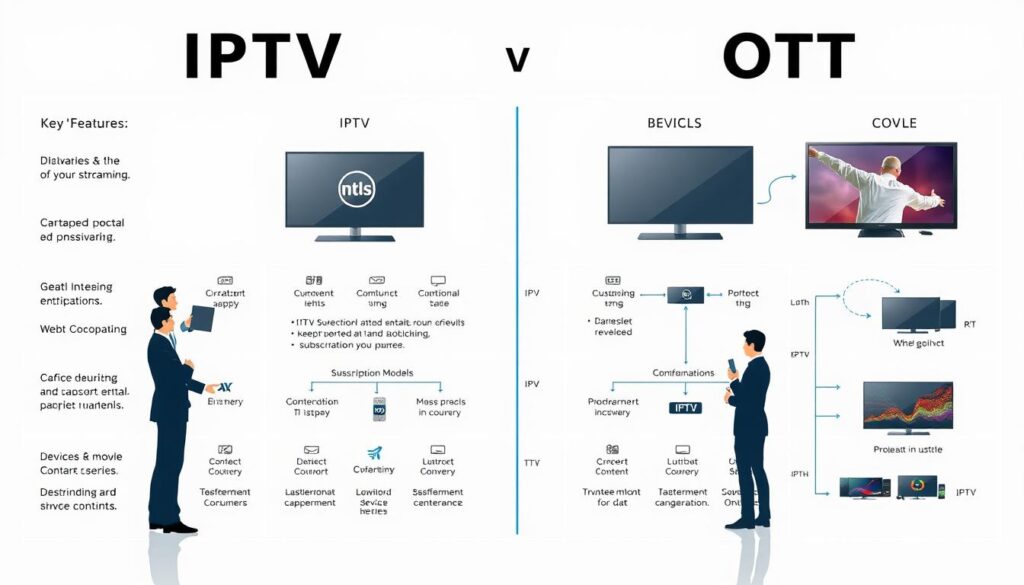
When considering television streaming options, one crucial decision is whether to opt for IPTV or Over-the-Top (OTT) streaming services. The primary difference lies in their delivery networks. IPTV uses a private, managed network provided by an ISP, dedicating bandwidth to ensure high quality and reliability. In contrast, OTT services like Netflix and Hulu use the public internet, where video streams compete with other data traffic, potentially leading to buffering or lower quality during peak times.
Technical Differences and Performance
IPTV services operate on managed, private networks with dedicated bandwidth for video delivery, ensuring consistent video quality, especially during peak usage hours. On the other hand, OTT streaming services, which use the public internet infrastructure, are more susceptible to congestion and quality fluctuations. This fundamental difference in network infrastructure directly impacts the performance and reliability of the streaming experience.
Content Libraries and Exclusivity
The content libraries of IPTV and OTT services differ significantly. IPTV services focus on delivering traditional TV channels with linear programming schedules, supplemented by on-demand options. In contrast, OTT platforms primarily offer on-demand libraries with original content exclusive to their platforms. For instance, Netflix is known for its exclusive original content, while IPTV services may offer a broader range of live channels, including sports and news.
The choice between IPTV and OTT streaming services ultimately depends on individual preferences regarding content availability, streaming quality, and service flexibility. By understanding the technical differences and content offerings of each, consumers can make informed decisions that best suit their viewing needs.
The Future of IP Television IPTV
With internet speeds increasing and content creation tools becoming more accessible, IPTV is set to democratize the television industry. The evolution of IPTV is not just about how we watch content, but also about who gets to create and distribute it. Historically, broadcasting was the exclusive domain of large corporations with deep pockets. However, IPTV changes this equation by providing a global distribution network accessible to anyone.
Advancements in Technology
The future of IPTV will be shaped by several emerging technologies. 8K video resolution, for instance, promises to deliver unprecedented video quality. Artificial intelligence-driven content recommendations will also play a crucial role in personalizing the viewing experience. Furthermore, the integration of virtual reality (VR) and augmented reality (AR) will open new avenues for immersive entertainment.
As IPTV technology continues to evolve, 5G networks will revolutionize mobile IPTV consumption by providing the necessary bandwidth and low latency for high-quality streaming on the go.
| Technology | Impact on IPTV | Benefit to Users |
|---|---|---|
| 8K Resolution | Enhanced video quality | Better viewing experience |
| AI-driven Recommendations | Personalized content | More relevant content suggestions |
| 5G Networks | Improved mobile streaming | High-quality streaming on-the-go |
Market Dynamics and Predictions
We’re witnessing the democratization of content creation and distribution as IPTV technology becomes more accessible. This allows niche content providers to launch specialized channels without massive infrastructure investments. However, market consolidation is also on the horizon as major telecommunications companies and content producers seek vertical integration.
“The future of television is not just about the technology itself, but about how it enables new forms of content creation and distribution.”
Personalization will reach new heights with AI-driven content curation, potentially creating custom content edits and highlight reels tailored to individual preferences. As the IPTV landscape continues to evolve, it’s clear that the technology will play a pivotal role in shaping the future of entertainment.
How to Choose the Right IPTV Service for Your Needs
With numerous IPTV services available, selecting the one that best suits your needs requires careful consideration of several key factors. To make an informed decision, you need to evaluate the IPTV service based on your specific viewing priorities.
Essential Factors to Consider
Begin by clearly defining your viewing priorities. If you’re a sports enthusiast, focus on services with comprehensive sports packages and multi-game viewing features. Movie buffs should prioritize extensive on-demand libraries and premium movie channels.
Evaluate the content reliability by requesting a free trial period to test channel stability, streaming quality during peak hours, and user interface responsiveness before committing to a subscription.
Consider the technical support infrastructure, including 24/7 customer service availability, multiple support channels (phone, chat, email), and the quality of self-help resources.
Red Flags and Warning Signs
Be wary of red flags that indicate potentially illegitimate services, such as suspiciously low pricing (thousands of premium channels for under $20/month), vague business information, cryptocurrency-only payment requirements, and promises of “unlimited” content without regional restrictions.
Evaluate the platform’s future viability by researching the provider’s history, reading current customer reviews, checking their development roadmap for new features, and assessing their compliance with industry standards and regulations. For more information on choosing a reliable IPTV service, visit our IPTV buying guide.
Conclusion
In conclusion, IPTV is redefining the television experience, offering a more interactive and customizable platform for users. The technology continues to mature, with improving infrastructure, sophisticated user interfaces, and expanding content libraries that cater to diverse viewing preferences.
When selecting an IPTV service, it’s crucial to prioritize legitimate providers that offer transparent pricing, verifiable business information, and reliable customer support. Consider your specific needs regarding content preferences, viewing habits, and budget constraints to find the service that delivers the best value for your household.
As the lines between traditional television, IPTV, and OTT streaming continue to blur, consumers benefit from increased competition, innovative features, and more flexible payment models. This evolution puts viewers in control of their entertainment experience, making it an exciting time for cord-cutters and streaming enthusiasts alike.